01
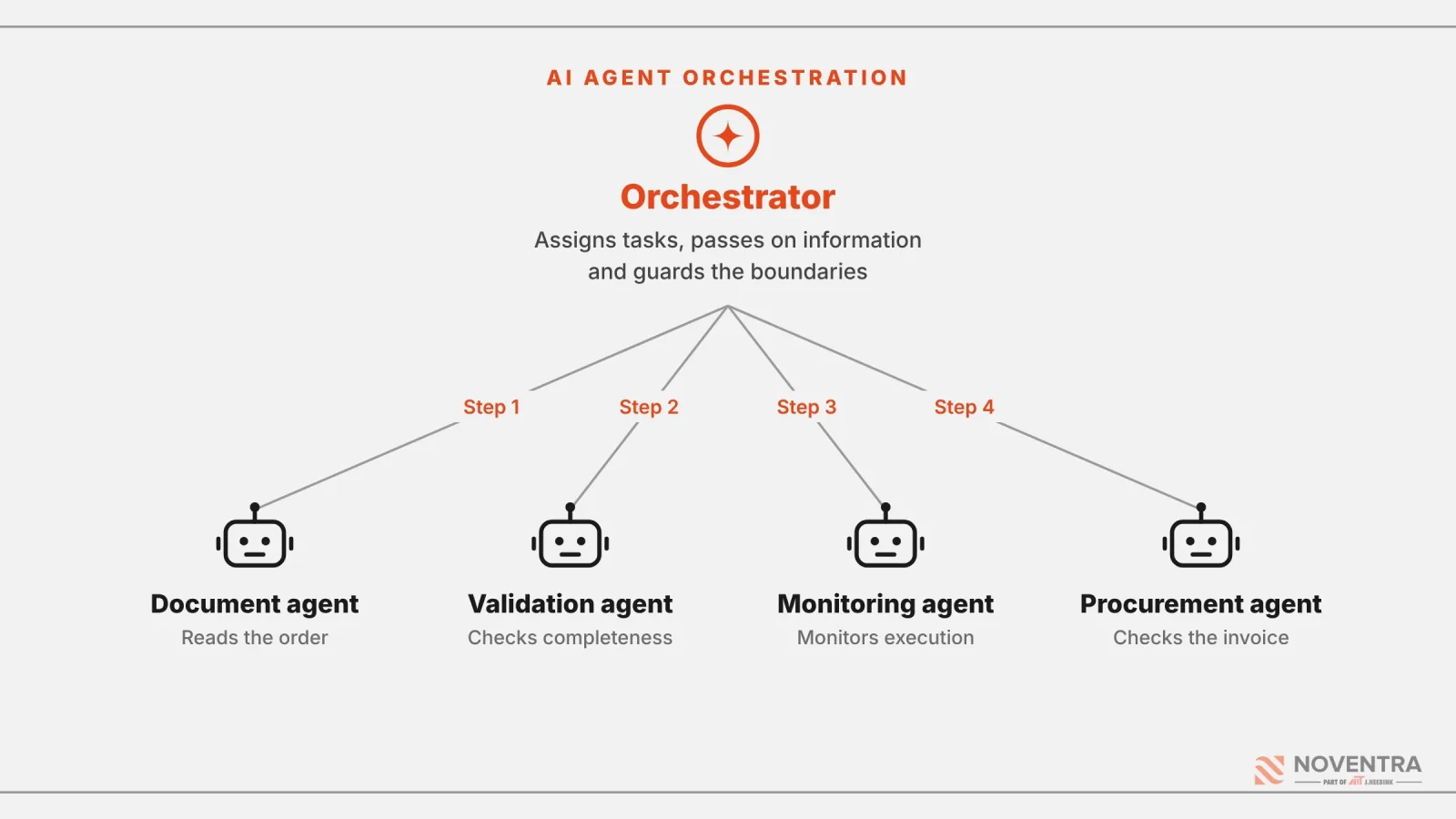
What does the orchestration layer do?
Distributing tasks
The orchestration layer decides which agent picks up which task and in what order, so that work is not done twice or not at all.
Passing on information
The outcome of one agent is immediately available to the next. A transport order that has been read goes straight on, without intervention, to the agent that monitors execution.
Resolving conflicts
If two agents reach different conclusions, this is recognised and, where necessary, referred to an employee.
Supervising
The orchestration layer monitors whether agents stay within their agreed boundaries. If an action exceeds those limits, it is stopped.